
Importance of Biocides in Cooling Water to Improve Heat Exchanger Efficiency
Why Cooling Water Biocides Are Essential
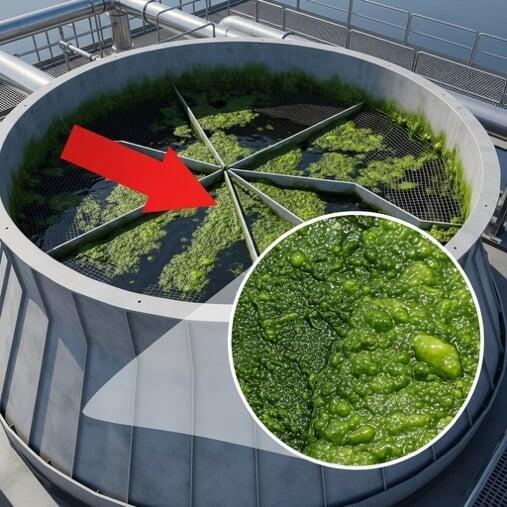
Cooling water is a favorable environment for microorganisms such as bacteria, fungi, and algae. If not controlled, they form slime and biofilms that:
- Insulate heat exchanger surfaces, lowering efficiency.
- Increase pumping and operational costs.
- Trigger microbially influenced corrosion (MIC).
- Pose health risks such as Legionella outbreaks (WHO, 2020).
This makes biocides in cooling water treatment an indispensable tool for industrial plants.
Types of Biocides for Cooling Towers and Heat Exchangers
1. Oxidizing Biocides
Examples: chlorine, bromine, chlorine dioxide
- Fast-acting and cost-effective.
- Effective against a broad range of bacteria and algae.
- Best for continuous dosing in cooling water treatment.
2. Non-Oxidizing Biocides
Examples: glutaraldehyde, isothiazolinones, DBNPA
- Target resistant biofilms more effectively.
- Useful in alternating biocide programs.
- Typically applied as shock doses to prevent microbial resistance.
Pro Tip: Alternating oxidizing and non-oxidizing biocides improves effectiveness and avoids resistance (Cooling Technology Institute, 2021).
How Biocides Improve Heat Exchanger Efficiency
- A 0.1 mm biofilm can insulate as much as a 2.5 mm scale deposit, reducing performance drastically (EPRI, 2018).
- Biofouling increases approach temperatures, forcing equipment to work harder.
- Effective microbial control through biocides can cut energy costs by up to 30% while extending equipment lifespan.
Best Practices for Biocide Application in Cooling Water Systems
- Regular monitoring: microbial counts, ATP tests, dip slides.
- Alternating programs: rotate oxidizing and non-oxidizing biocides.
- Correct dosage & frequency: avoid under- or over-dosing.
- Integrated treatment: use with scale inhibitors and dispersants for comprehensive protection.
Conclusion: Optimizing Energy and Sustainability with Biocides
A well-planned biocide program for cooling water treatment enhances heat exchanger efficiency, reduces energy consumption, prevents downtime, and ensures compliance with health and safety standards.
By controlling microbial growth, industries achieve sustainable operations, lower costs, and longer equipment life—a win for both profitability and environmental stewardship.