
Odor control for Sewage Treatment Plants
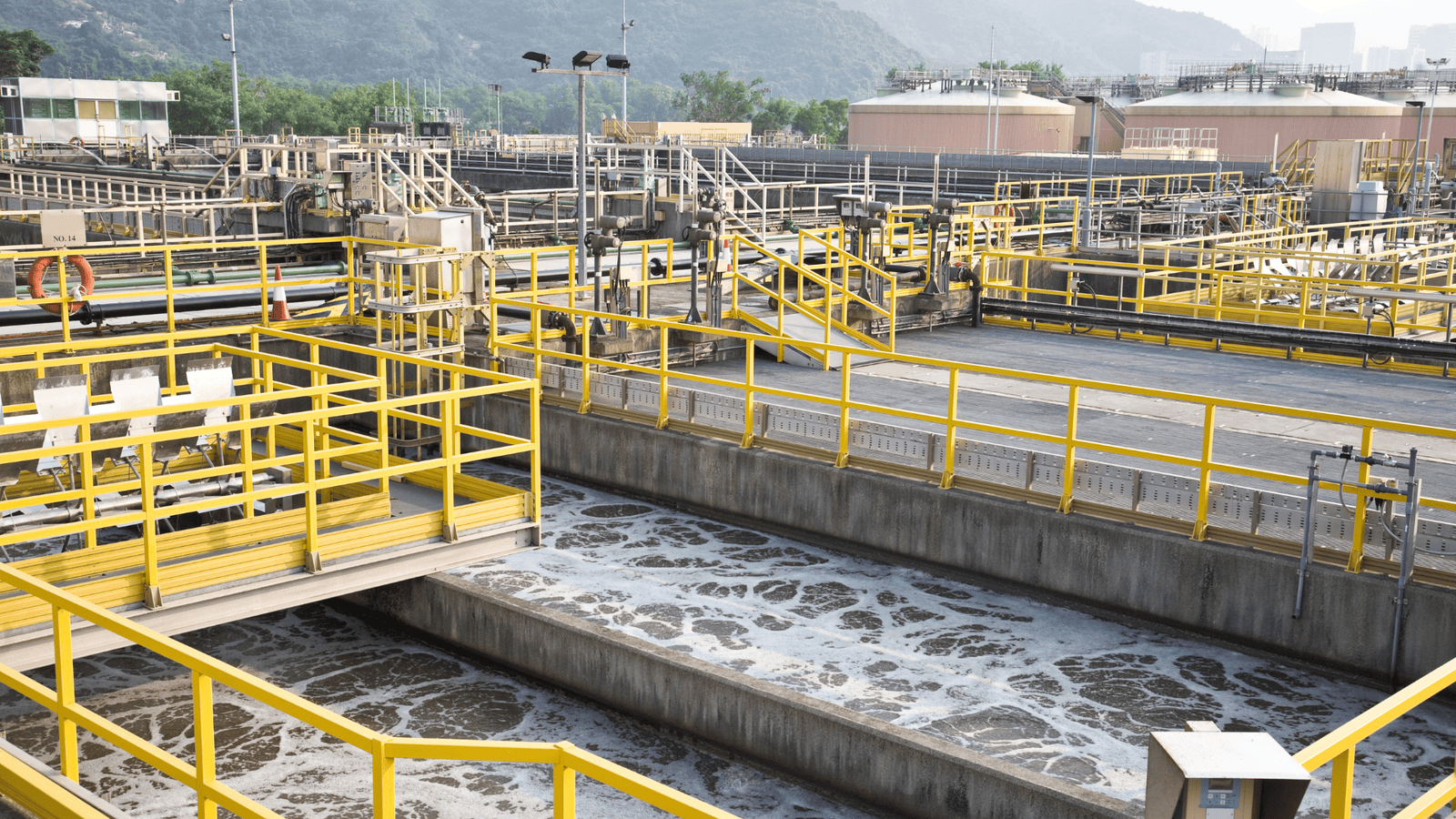
Odors from sewage treatment plants primarily result from anaerobic decomposition, where bacteria break down organic waste under low-oxygen conditions, releasing gases such as hydrogen sulfide (H₂S), which smells like rotten eggs, and ammonia (NH₃). These odors often intensify during warmer weather, due to poor aeration in tanks, or when systems become overloaded and inadequately ventilated.
Key Reasons for Odor Generation:
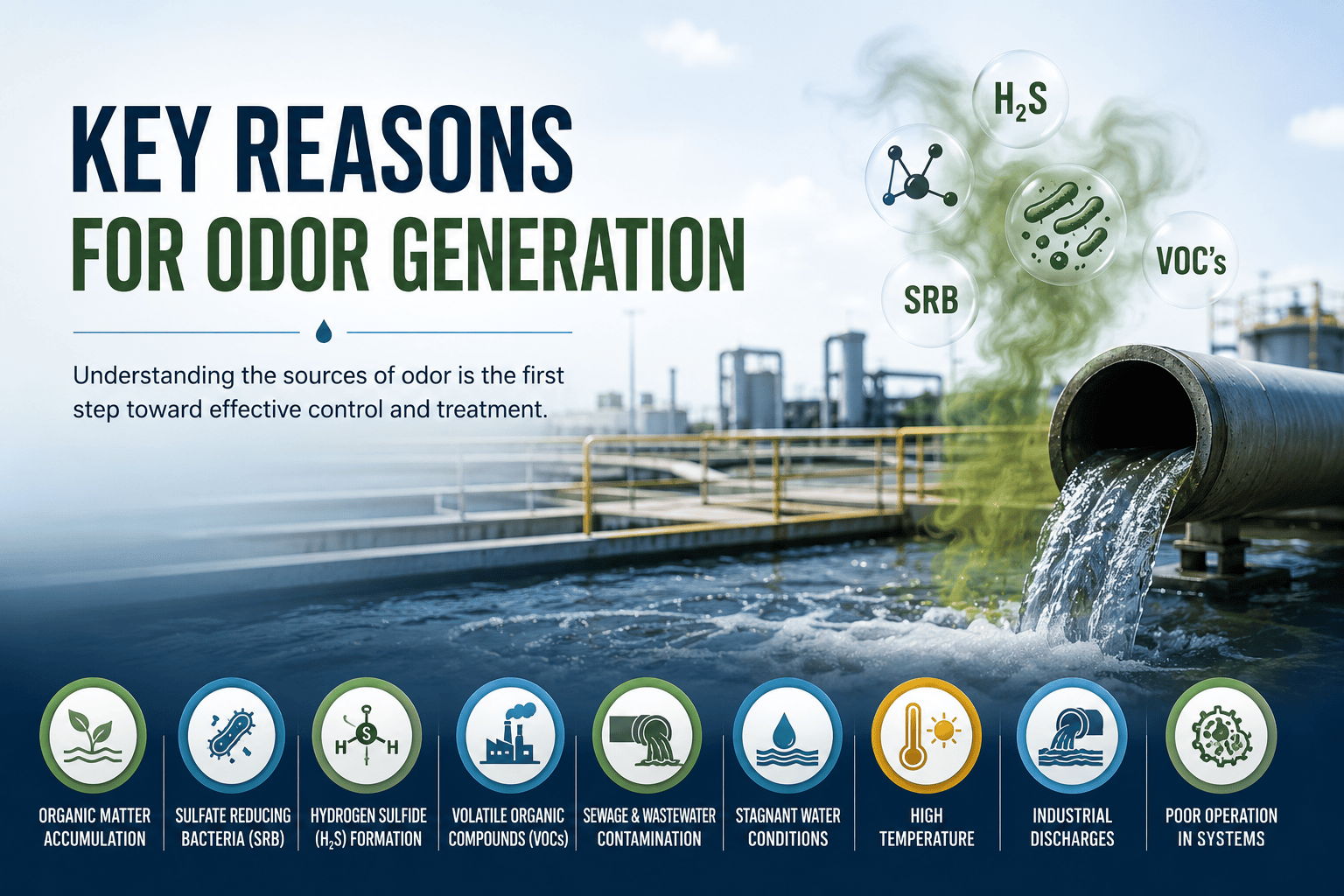
Anaerobic Bacterial Activity: When wastewater lacks sufficient dissolved oxygen (below 2 mg/L), sulfate-reducing bacteria thrive and produce hydrogen sulfide (H₂S) gas, which causes the characteristic “rotten egg” odor.
• Accumulated Sludge: Stagnant sludge at the bottom of holding or equalization tanks decomposes and releases strong odors, including mercaptans and other volatile organic compounds (VOCs).
• Insufficient Ventilation or Aeration: Clogged diffusers or inadequate ventilation reduce proper aeration, allowing odorous gases to accumulate and escape into the surrounding air.
• High Temperatures: Elevated temperatures, especially during summer, accelerate sewage decomposition and microbial activity, leading to increased odor emissions.
• pH Imbalances: Chemical fluctuations, such as pH levels above 8.5, can disrupt beneficial microbial activity and increase ammonia volatilization, resulting in sharp and pungent odors.
Common Odor Locations within a Plant:
Inlet Works/Screening: Where raw sewage first enters.
Equalization & Sludge Tanks: Where sewage is stored.
Dewatering Areas: Where water is removed from sludge.
To mitigate these, plants often use odor control unit to treat the gases before they are released.
These can be used in Apartments , Commercial buildings , Industries where STP is underground and as well as above ground